Contexto #111
Every guess is ranked by how close it is in meaning. Lower is closer.
Free and independent, in five languages. Not affiliated with contexto.me.
From the people who make this site
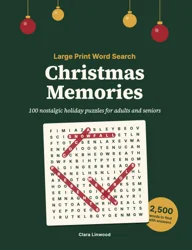
A Christmas gift for the puzzle lover in your family
Christmas Memories: 100 large print word searches on holiday themes, with answers in the back. Big, clear letters, easy on the eyes. A paperback for anyone who likes puzzles away from a screen.
$9.99 paperback
See it on AmazonAs an Amazon Associate we earn from qualifying purchases.
Contexto Today — Free Daily Word Game, Guess the Secret Word
How the ranking works
Every guess is scored against the same list of 70,000 words, ordered by how close each one sits in meaning to today's answer. Rank 1 is the word itself. Rank 10 means only nine words in the entire list are closer. Rank 40,000 means your guess is unrelated — which is information too, and worth as much as a near miss when you are trying to work out which direction to go.
There is no letter grid, no word length, and no clue about spelling. The number is the only feedback you get, and it is the only feedback you need.
Meaning, not letters
The ordering comes from a model trained on how words are actually used together across billions of sentences, so words that turn up in the same contexts end up close to each other. If “ocean” scores well, then “sea”, “tide” and “shore” are worth trying. “Occasion” is not — it shares five letters with ocean and nothing else at all.
That is the whole difficulty. A letter game rewards knowing which letters are left. This one rewards knowing which ideas sit next to each other, which is a different skill and a slower one to build.
When you get stuck
Open with a common, concrete noun rather than something obscure. Rare words sit far from almost every answer, so a bad rank on one tells you very little. Once a guess lands well, try a different form of it — a plural, or a closely related noun — because the neighbourhood around an answer is usually crowded.
A new puzzle goes live every day at midnight UTC. Yesterday's stays playable in the archive, and Unlimited deals from a separate pool kept aside for practice, without touching your streak.
Where the day's word comes from
Answers are not picked at random from the dictionary. Every candidate has to be a concrete noun with a single dominant sense, common enough that most players will know it but not so common that it sits near everything. Words with several unrelated meanings are dropped, because the ranking around them belongs to whichever sense the model saw most, and that makes for a day players quit on.
Inflected forms, abbreviations and adjectives that happen to own a noun sense are filtered out too, along with topics that would make an unpleasant word of the day even though the words themselves are ordinary. The list is then read by a human before anything is published, because no automatic filter catches all of it.
Everyone plays the same word
There is one answer per day, shared by every player in that language, and it changes at midnight UTC. That is what makes a score worth comparing: when someone says they solved it in eleven, they solved the same puzzle you did.
Sharing a result copies your guess count and the shape of your run — how the ranks fell as you closed in — and never the word itself, so posting it cannot spoil the day for anyone who has not played yet.
How it differs from Wordle and Semantle
Wordle is a spelling puzzle with six attempts and feedback about letters. This has unlimited attempts and no letter feedback at all, so the games have almost nothing in common beyond a daily word — a five-letter guess with four correct letters is worth nothing here if the meaning is wrong.
Semantle is the closer relative: it also scores by meaning. The difference is what you are shown. Semantle reports a similarity score, which is hard to read on its own; this reports a rank out of the whole vocabulary, so you always know how many words are between you and the answer.